 1300613204
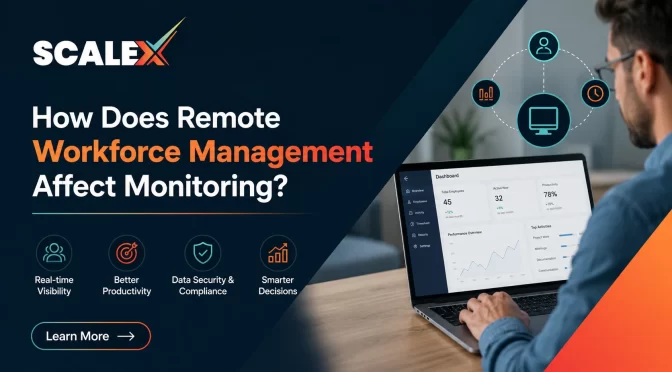
How employee monitoring affects remote workforce management in Australia depends on how businesses use monitoring tools, communicate expectations and balance productivity with employee trust. A thoughtful approach can support visibility without creating unnecessary pressure. Scale-X Solutions, an experienced outsourcing and remote staffing company, can help Australian businesses walk through the process, explore practical workforce strategies and build a more effective remote working model.
What Is Employee Monitoring?
Employee monitoring uses digital tools to track work-related activities, helping businesses understand workflows, productivity and security. For remote teams, an Australian virtual assistant company can provide practical support, helping businesses manage daily operations efficiently while maintaining clear expectations, accountability and appropriate oversight.
How Employee Monitoring Supports Remote Workforce Management
When used appropriately, employee monitoring can help businesses identify workflow delays, manage workloads and improve accountability. It may also support data security by identifying unusual activity. For managers, these insights can make remote workforce management more organised, measurable and responsive to operational challenges.
Can Employee Monitoring Reduce Productivity?
Employee monitoring does not always improve productivity. Excessive surveillance can create pressure, reduce autonomy and shift attention toward appearing busy. With Scale-X Solutions, businesses can focus on meaningful outcomes, clear responsibilities and efficient performance while supporting employee trust, flexibility and engagement.
Impact On Employee Trust And Engagement
Trust plays an important role in successful remote teams. When employees feel constantly watched, they may believe management doubts their abilities or commitment. This can reduce engagement and morale. Transparent monitoring policies, clear expectations and regular communication can help maintain stronger relationships between employees and managers.
Employee Monitoring And Australian Privacy Requirements
Australian businesses need to consider privacy and workplace surveillance requirements before monitoring employees. The rules can vary depending on the location and type of monitoring involved. Organisations should clearly explain what information they collect, why they collect it, who can access it and how long it remains stored.
How To Use Employee Monitoring Responsibly
Responsible monitoring should focus on clear business goals, necessary data and transparent policies. Businesses can prioritise outcomes over constant activity tracking. Working with full-time online staff Sydney can also support efficient operations through clear expectations, measurable goals, quality standards and consistent performance management.
Final Thoughts
Employee monitoring can strengthen visibility, security and accountability when used responsibly. Scale-X Solutions helps businesses balance monitoring needs with employee privacy, trust and independence. By focusing on outcomes, clear expectations and productivity, organisations can create stronger, more effective remote teams while supporting sustainable workforce management.
Find Talent Faster
Call 1300613204 or email contactus@scale-x.biz.biz to connect with skilled remote professionals.
Commonly Asked Questions
Is Employee Monitoring Good For Remote Workers?
It can be when monitoring is proportionate, transparent and connected to legitimate business needs.
Does Employee Monitoring Improve Productivity?
It can provide useful operational insights, but excessive surveillance may reduce trust, engagement and productivity.
Is Remote Employee Monitoring Legal In Australia?
It depends on the monitoring method and applicable federal, state and territory requirements. Businesses should obtain appropriate legal or HR advice.
What Is Better Than Tracking Keystrokes?
Clear goals, regular check-ins and outcome-focused reviews provide valuable performance insights, helping Scale-X Solutions manage teams more effectively and transparently.
Why Do Australian Businesses Monitor Remote Employees?
Australian businesses may monitor remote employees to improve operational visibility, protect business resources, manage workflows and maintain organisational standards across distributed teams.
Can Employee Monitoring Improve Accountability?
Yes, appropriate monitoring can clarify responsibilities, highlight workflow issues and encourage employees to stay aligned with agreed workplace expectations and responsibilities.
What Should Employers Consider Before Monitoring Employees?
Employers should consider business necessity, employee privacy, transparency, proportionality, data handling practices and relevant workplace requirements before implementing monitoring systems.
How Can Monitoring Affect Workplace Culture?
Poor monitoring practices can create uncertainty and discomfort, affecting openness, trust and engagement while Scale-X Solutions promotes healthier workplace management approaches.
Can Remote Monitoring Support Cybersecurity?
Monitoring may help identify unusual access patterns, potential security incidents and unauthorised activity, supporting stronger cybersecurity practices across remote working environments.
